

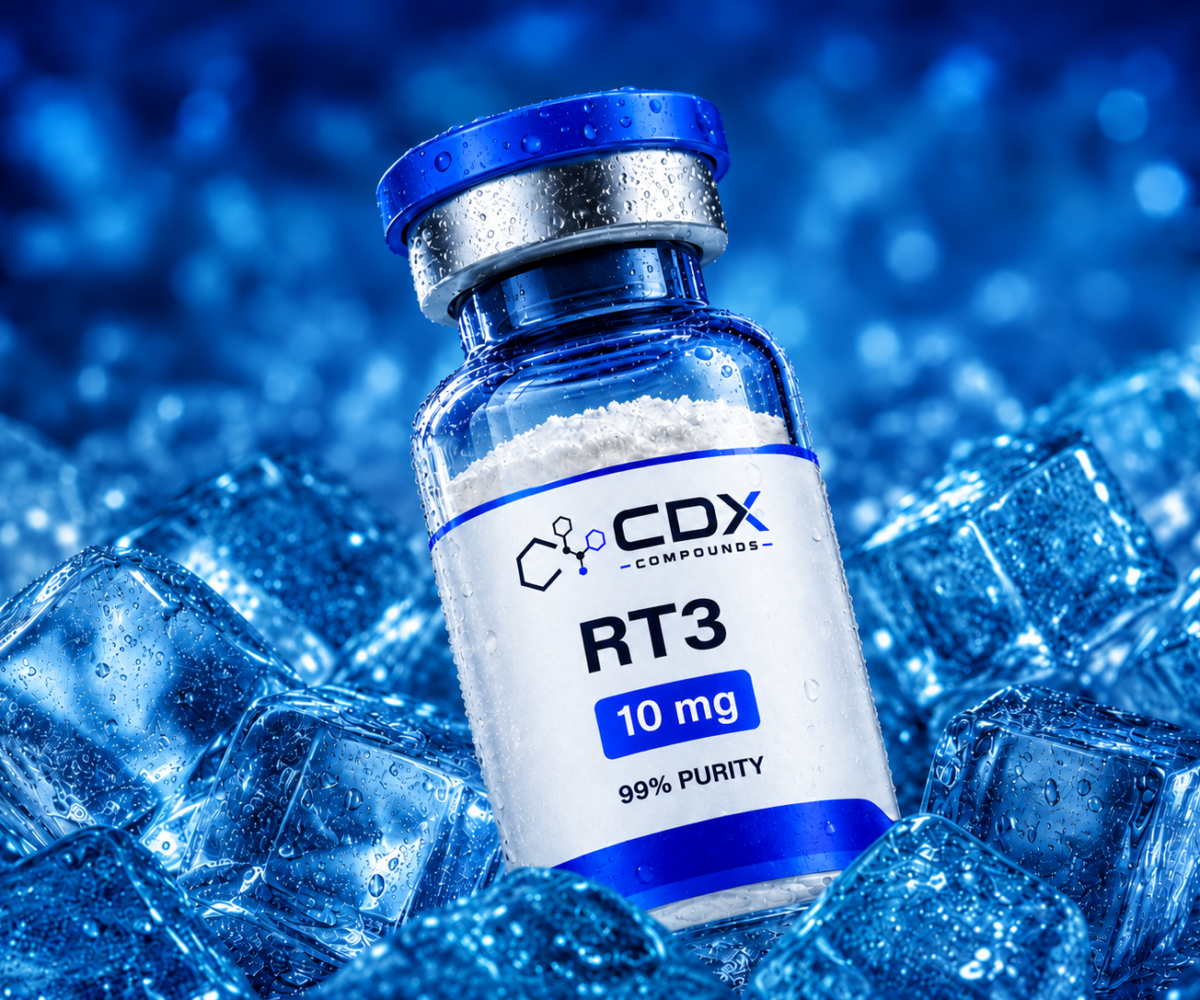
Pentadecapeptide — Synthetic Fragment
RT3
Retatrutide (LY3437943) is a synthetic peptide investigated as a molecular research tool for studying three receptor systems: glucose-dependent insulinotropic polypeptide (GIP), glucagon-like peptide-1 (GLP-1), and glucagon receptors. Its triple-receptor agonist...
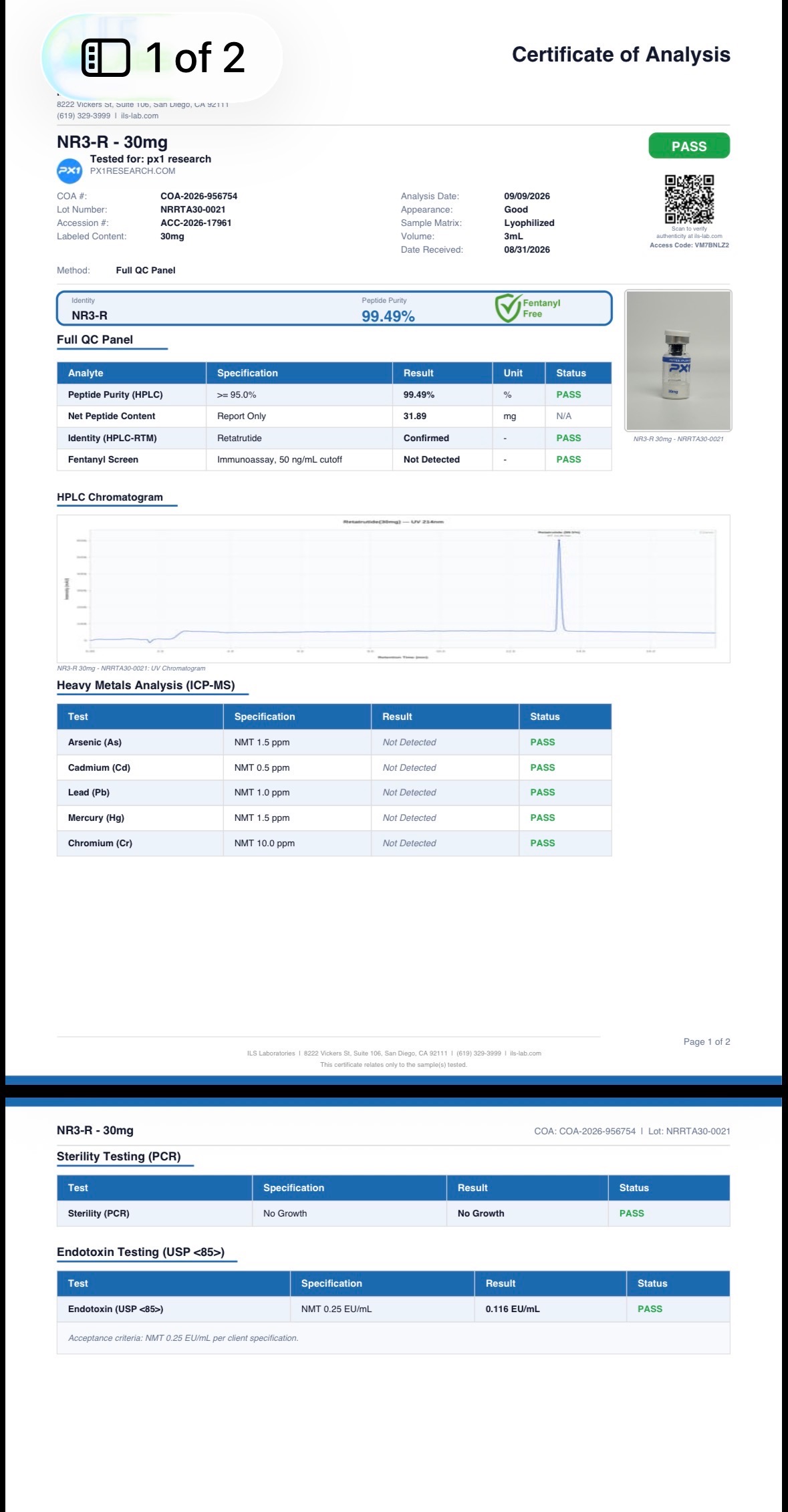
Certificate of Analysis
Research Use Only — not for human or veterinary consumption. See our Research Use Only Policy for eligibility details.
Retatrutide (LY3437943) is a synthetic peptide investigated as a molecular research tool for studying three receptor systems: glucose-dependent insulinotropic polypeptide (GIP), glucagon-like peptide-1 (GLP-1), and glucagon receptors.
Its triple-receptor agonist profile allows researchers to examine interactions among these signaling pathways within controlled experimental models.
This material is supplied exclusively for laboratory research and analytical applications.
Specifications
Product Classification: Research Use Only (RUO)
Compound: Retatrutide (LY3437943)
Available Content: 10 mg or 30 mg per vial
Classification: GIP / GLP-1 / Glucagon receptor agonist
Form: Lyophilized research material
Packaging: Research vial
Purity: ≥99% (include only when confirmed by the applicable batch COA)
Intended Use: Laboratory research and analytical purposes only
Research Applications
Retatrutide may be used in controlled laboratory models investigating:
- GIP receptor signaling
- GLP-1 receptor signaling
- Glucagon receptor signaling
- Triple-receptor agonism
- Receptor-binding activity
- Intracellular signaling
- Multi-receptor pathway interactions
- Metabolic signaling models
Warning
FOR RESEARCH USE ONLY. NOT FOR HUMAN OR VETERINARY USE. NOT FOR HUMAN CONSUMPTION.
This product is intended solely for qualified laboratory research and analytical applications.
Scientific Report
Abstract
Retatrutide is a synthetic peptide characterized experimentally by agonist activity across GIP, GLP-1, and glucagon receptors. This triple-receptor profile provides a molecular model for examining the simultaneous activation and interaction of three distinct receptor pathways.
Mechanistic Pathways
GIP Receptor
Retatrutide exhibits agonist activity at the GIP receptor.
Research focus: Receptor activation and downstream GIP-associated signaling.
GLP-1 Receptor
GLP-1 receptor activity represents a second component of the compound's experimental pharmacological profile.
Research focus: GLP-1 receptor activation and associated intracellular signaling.
Glucagon Receptor
Retatrutide also interacts with the glucagon receptor.
Research focus: Glucagon-receptor activation and downstream pathway analysis.
Triple-Receptor Interaction
The defining characteristic of retatrutide as a research compound is the ability to examine three receptor systems using a single molecular platform.
Research focus: Interactions among GIP, GLP-1, and glucagon receptor pathways.
Research Profile
Compound: Retatrutide / LY3437943
Classification: Triple-receptor agonist
Primary Research Areas: GIP, GLP-1, and glucagon receptor signaling
Research Setting: Controlled laboratory and preclinical models
Research Parameters
Experimental concentrations, assay conditions, exposure periods, controls, and endpoints should be selected according to the laboratory model and validated research protocol being used.
No instructions for human or veterinary use are provided.
Research Highlights
- GIP receptor activity
- GLP-1 receptor activity
- Glucagon receptor activity
- Triple-receptor signaling
- Receptor interaction studies
- Intracellular pathway research
- Metabolic signaling models
Conclusion
Retatrutide provides researchers with a molecular tool for studying simultaneous GIP, GLP-1, and glucagon receptor activity and interactions among these pathways under controlled experimental conditions.
Research Use Only — not for human or veterinary consumption.
Please review our Research Use Only Policy for eligibility details.